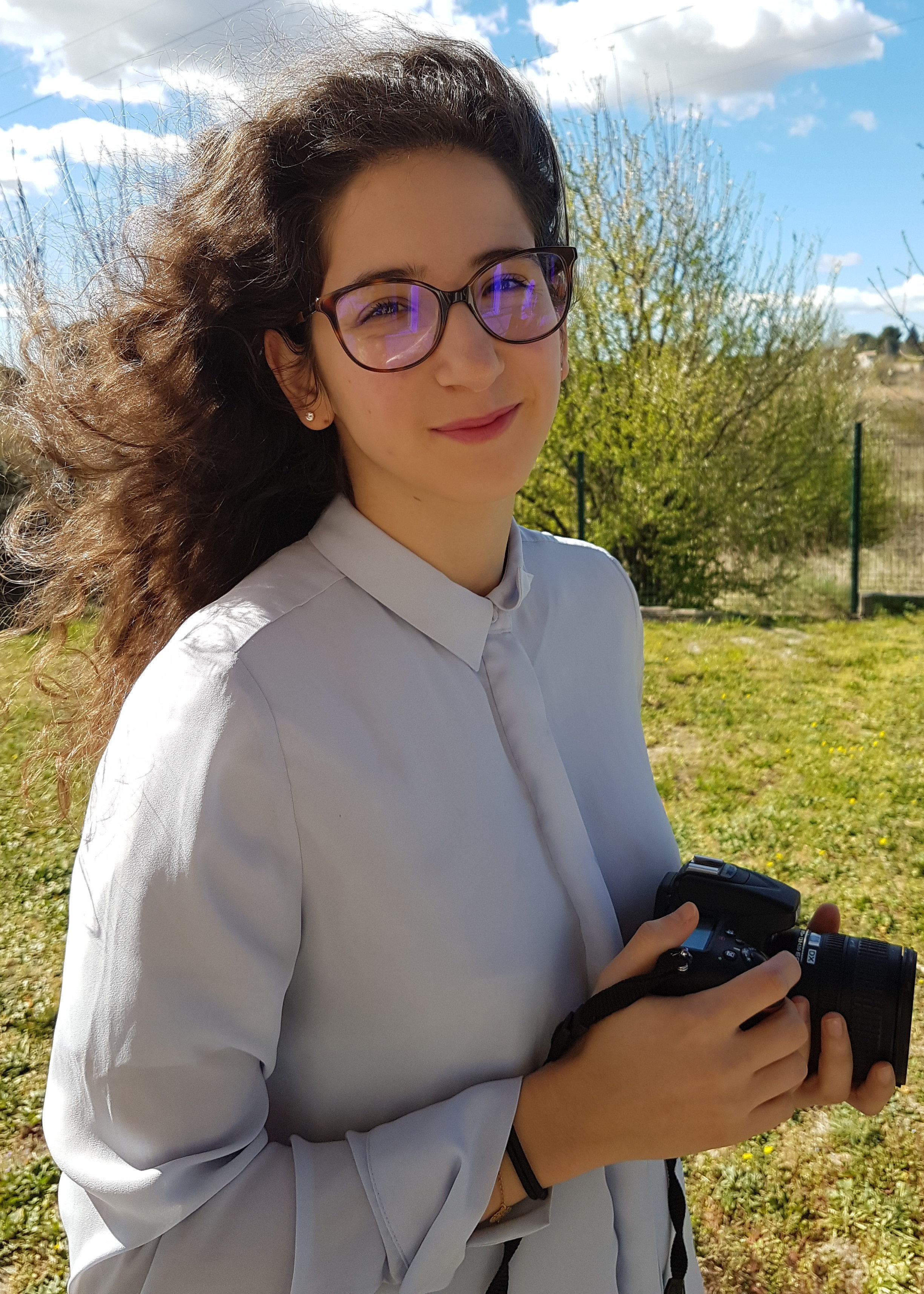
Hello,This is me!

Alex Learning Photography

Learn about photography Improve your photos Together and step by step

All the articles

Lack of INSPIRATION? How to be creative in photography?

How to be creative in photography?

Today I'm going to talk to you about how to be more creative in photography! There are people who are naturally creative, they will always be inspired and always have ideas. Before I thought that I too was not capable of being creative, and I thought that there were people who were born with this gift of being creative. We experience sensations all the time, only we are not on the lookout for what we feel.

That's why the first advice I can give you to be more creative is to listen for yourself. I know it may sound complicated, but in fact you have to know the difference between something you find beautiful because you've seen a lot of it, you see this kind of picture everywhere on social networks, it's a trend or is it something you find beautiful in essence, because you've always found it beautiful. If you want to be creative, you have to photograph what you like personally, what touches you. When you feel something, just shoot, without even worrying about the rules of photography.
Image by @matthieu_george

That's why the first advice I could give you in order to be more creative is to listen to yourself. I know it may sound complicated, but in fact you have to know the difference between something you find beautiful because you've seen it lot, everywhere on social networks, it's a trend or  something you find beautiful in essence, because you've always found it beautiful. If you want to be creative, you have to photograph what you like personally, what touches you. When you feel something, just shoot it, without even worrying about the rules of photography.


Keep your camera with you at all times. If you don't have the opportunity or time, it doesn't stop you from thinking about the picture you could take. Find the subject, frame the picture and think about how you would take the shot, all mentally. It will exercise your eye a lot, and make you think creatively.

Keep your camera with you at all times. If you don't have the opportunity or time, it doesn't stop you from thinking about the picture you could take. Find the subject, frame the picture and think about how you would take the shot, all mentally. It will exercise your eye a lot, and make you think creatively.


Be inspired by other people. Be careful, it is not a question of copying other people's work. It is about seeing and understanding how others see the world, in order to confront you with other points of view, to put you in their shoes and to see things "through their eyes". This will allow you to change your perspective and see things differently.        Here are some instagram accounts that inspire me:  - @som_picture  - @matthieu_george  - @Quentindarde  - @friendsinbnw   - @_estelle_louise
Image by Chris (@som_picture)

Be inspired by other people. Be careful, it is not a question of copying other people's work. It is about seeing and understanding how others see the world, in order to confront you with other points of view, to put you in their shoes and to see things "through their eyes". This will allow you to change your perspective and see things differently.


Here are some instagram accounts that inspire me:

Do not be afraid of the look of others. I guarantee you that if you lie on the floor in the street to take THE shot you want, no one cares. It's hard to believe, but you're not the center of the world 😛. People will just vaguely look at you, and forget you within 30 seconds. Anyway, they've already seen more crazy than you, don't worry.

Do not be afraid of what people think. I guarantee you that if you lie on the floor in the street to take THE shot you want, no one cares. It's hard to believe, but you're not the center of the world 😛. People will just vaguely look at you, and forget you within 30 seconds. Anyway, they've already seen more crazy things than you, don't worry.


Once you have taken one or more pictures, what I recommend is to "let them rest". This will allow you to add an important ingredient to your picture: the time 🕔. Only time will tell you whether you really like a picture or not. So let your photos sleep for a while (1 month, 3 months or even 1 year). You can leave them in a corner of your computer or make prints of them. In a while, reopen this box with all the pictures you've taken. Some photos will leave you completely unmoved, in which case you can throw them away. But other pictures will remind you directly of the feeling you had when you took the picture.
Once you have taken one or multiple pictures, what I recommend is to "let them rest". This will allow you to add an important ingredient to your picture: the time 🕔. Only time will tell you whether you really like a picture or not. So let your photos sleep for a while (1 month, 3 months or even 1 year). You can leave them in a corner of your computer or make prints of them. After a while, reopen this box with all the pictures you've taken. Some photos will leave you completely unmoved, in which case you can throw them away. But other pictures will remind you directly of the feeling you had when you took them.


Here, I hope that these tips will allow you to develop all this creativity buried in you, and to make more personal shoot. 😊

How to take night photos?


Night photography, shutter speed, aperture, ISO, City Lights, how to set up your camera for night photography
Without light, there is no picture. Intuitively, once the sun sets, we would be tempted to store the camera and go about our other activities. Except that the city's lights have a special charm that you sometimes want to photograph.
At night, the main constraint is obviously the lack of light. It is always important to ask yourself the question of the constraints to face a photographic situation.
At night, it's a completely different world that opens up to the creativity of photographers, so enjoy it!

How to set up your camera?


How can we compensate for this lack of light? If you remember the articles on exposure, there are 3 simple ways to do it:
Increase the aperture (which is limited by the maximum aperture of your lens)
Slow down the shutter speed (which is limited by your stability and the presence or not of stabilization, or even a tripod)  
- Increase ISO sensitivity (which is limited by the capabilities of your camera, which produces less and less clean images as ISOs increase)


The tricks for night photography will therefore mainly consist of maximizing these three parameters while obtaining a satisfactory result (desired depth of field, sharp picture, not too noisy).

My tips for night photography


Night photography is a very diverse discipline: it can include urban landscapes, architecture, life scenes, portraits, etc... Here are some tips that can be useful for you to improve your night photography:

- Shoot during the "blue hour". This is actually the moment after the golden hour, when the sun is down but the sky is still royal blue for a few minutes. Having a sky of this colour is much more aesthetic than a black sky, and provides a complementary colour to the orange yellow of night lighting.

Shoot during the "blue hour". This is actually the moment after the golden hours, when the sun is really down but the sky is still a royal blue for a few tens of minutes.


- Water is your friend. The reflections in the water are extremely aesthetic.
The reflections in the water


The reflections in the water


- Use city lights to add a light source to your photos

Use city lights to add a light source to your photos

 - If you have trouble focusing, switch to LiveView and focus naturally by enlarging the image (see your camera's manual if you don't know how to do it). You can also switch to manual focus.

- Golden rule for night shots: forget the flash. The flash will probably illuminate the first few meters, but not the rest. Result: a very white foreground and black background... It is the typical missed photo!

- The long pose is your friend. To succeed, arm yourself with a cheap tripod or place your camera either on the ground or on stable support (car roof, bridge railing...) avoid placing your camera on your friend's back, as it is generally unreliable. Try to capture a moving light source, such as cars, a carousel, a fireworks. This movement will be transcribed on the photo by lines of light, which generally produce graphic forms... 


Long pose, capture a moving light source, such as cars, a carousel, a fireworks.


You can use these same tips to take pictures with your smartphone!

Learning photography : night photography with a smartphone
Phone used : Huawei P20 Pro by Rémi drt 


Here, I hope these tips will be useful to you when it gets dark at 5:30 pm 😉 Post a comment if you have any questions or comments 😉

And don't forget to share the article! 🙂

How to get background blur in photography

How to get background blur in photography, Blog for beginner photographer how want to learn how to get a background blur , How to Achieve Background Blur or Bokeh with a DSLR. The depth of field is the area of the image in which objects are sharp, it is the sharpness area. Parameters for a background blur are the aperture, the focal length, the distance of the background from the subject, The distance of the camera from the subject

One of the first things I wanted to do when I bought my first camera was the background blur (or bokeh). I share with you in this article the technique for making a beautiful background blur.
At the same time as you read the article, I advise you to bring your camera and find a subject (decorative object, toy ...) to take a picture to practice.


But… what is the depth of field?

The depth of field is the area of the image in which objects are sharp, it is the sharpness area.
When the blur behind the subject is pronounced, the depth of field is said to be shallow (or reduced). Conversely, when all the elements are sharp on an image, the depth of field is said to be large.


How to create a background blur?

To make a beautiful creamy background blur you have several parameters to take into account:
- The aperture
- The focal length
- The distance of the background from the subject
- The distance of the camera from the subject

Here is a picture, where no particular settings have been applied. We will add settings as we go along in this picture to get our background blur. You can do the steps at the same time as me to practice.


By the way, I would like to introduce you Axel the Pelican who kindly agreed to pose for me:

How to get background blur in photography, Blog for beginner photographer how want to learn how to get a background blur , How to Achieve Background Blur or Bokeh with a DSLR. The depth of field is the area of the image in which objects are sharp, it is the sharpness area. Parameters for a background blur are the aperture, the focal length, the distance of the background from the subject, The distance of the camera from the subject
Settings: 1.25s, F/11, 17mm


The aperture

If you have read the article in the exposure triangle, you have understood that the aperture is used to manage the amount of incoming light as well as the distribution of blur and sharpness in the image.
To create a background blur, you have to open your diaphragm, so set the aperture to small values (f/1.4, f/2.5, f/3.5...). The blur takes up much more space and the sharpness area becomes smaller.
As shown in this diagram, the more you open the diaphragm and therefore lower the number after the F, the more you will get this famous blur.

Exposure triangle, lens aperture and background blur. How to get a background blur. To create a background blur, you have to open your diaphragm, so set the aperture to small values (f/1.4, f/2.5, f/3.5...). The blur takes up much more space and the sharpness area becomes smaller.

Let's take our test photo again with an aperture at f / 2.8 (my maximal aperture).

Exposure triangle, lens aperture and background blur. How to get a background blur. To create a background blur, you have to open your diaphragm, so set the aperture to small values (f/1.4, f/2.5, f/3.5...). The blur takes up much more space and the sharpness area becomes smaller.
Settings: 1.25s, F/2.8, 17mm


The maximum aperture is indicated on your lens:

The notation 17-70mm 1 : 2.8 - 4 means that the maximum aperture of the lens when I zoom at 17mm is F/2.8, and at 70mm it is F/4

The notation 17-70mm 1: 2.8 - 4 means that the maximum aperture of the lens when I zoom at 17mm is f/2.8, and at 70mm it is f/4.

The focal length

The focal length is what you certainly call: the zoom. It is expressed in millimetres (mm). I can say that at 200mm I zoom in a lot, at 10mm I zoom out a lot. The longer the focal length (zoom), the shallower the depth of field.
Basically to create background blur you need to... Zoom in to the maximum! So here I'm going to zoom at 70 mm.

Let's zoom on our picture as much as we can: 
The focal length is what you certainly call: the zoom The longer the focal length (zoom), the shallower the depth of field. Basically to create background blur you need to zoom in to the maximum!
Settings: 1.15s, F/4, 70mm


The distance of the background from the subject

It seems logical that if you focus on an object at, let's say, 50cm, if there is a wall just behind it, that wall can't really be blurry. To really get a blurry background, the background must be as far away as possible from the object on which you are focusing.
Photography, background blur, To really get a blurry background, the background must be as far away as possible from the object on which you are focusing
Axel is 1 meter from the background


The distance of the camera from the subject

The last parameter that affects the blur is your distance from the subject. 

your distance from the subject affects the blur background
On the first picture, I am 20cm from the subject. On the 2nd I'm at 1m.


Detach a subject from the background

I also tested these settings on a real person. You can see that the background blur can be used to isolate your subject from the background. The eye will immediately be drawn to this clear area and forget everything that is blurry. 

You can see that the background blur can be used to isolate your subject from the background. The eye will immediately be drawn to this clear area and forget everything that is blurry.


Here, the background blur is important. You can see that in the first picture Lisa is not demarcated. In the 2nd picture, people are blurry, so our eye is focused on Lisa.

What to remember

Phew, that's a lot of notion all of a sudden, isn't it? I propose a short summary of the parameters that affect the depth of field:
·      The larger the aperture (= a small f), the shallower the depth of field.
·      The longer the focal length (zoom), the shallower the depth of field.
·      The further away your background is from your subject, the blurrier this background will be.
·      The closer you are to the subject, the shallower the depth of field.

With all these settings combined, you should be able to create a beautiful background blur!
Depth of field is a complex concept, I myself had trouble understanding everything at once. I hope this article will help you to better understand your choices in your settings.
Of course, if you have any questions, don't hesitate to post a comment. 😉

Beginner photographer - the exposure triangle : Aperture/ Shutter Speed/ ISO


Hello ! 
Welcome to you on my blog, here is my first article and I hope you will enjoy it, have a good reading! 😊


Before taking beautiful pictures worthy of a great photographer, you must learn to master your camera. It's not the most exciting thing, but I assure you, you have to go through these first technical articles to understand your camera.


I advise you to bring your camera and your 
instruction manual with you when reading this article in order to directly put into practice what you learn. 

The exposure triangle

First of all, what is the exposure? Exposure is the quantity of light that enters your camera. The concept is simple: the more light enters, the brighter your photo will be, the less light enters, the darker your photo will be.


Properly exposed photo:


Underexposed photo:

Learn photography, photography, improve your photos, beginner in photography, beginner photography blog, beginner photography blog, beginner photography blog, blog to learn photography, exposure, exposure triangle, motion blur, aperture, diaphragm, shutter speed, ISO, sensor sensitivity, light sensitivity, camera, learn to use a camera, camera technology, depth of field, Light, sharpness, grain, digital noise


Overexposed photo:

Learn photography, photography, improve your photos, beginner in photography, beginner photography blog, beginner photography blog, beginner photography blog, blog to learn photography, exposure, exposure triangle, motion blur, aperture, diaphragm, shutter speed, ISO, sensor sensitivity, light sensitivity, camera, learn to use a camera, camera technology, depth of field, Light, sharpness, grain, digital noise


The cameras offer an integrated exposure metering system represented as follows on your camera's display:

Learn photography, photography, improve your photos, beginner in photography, beginner photography blog, beginner photography blog, beginner photography blog, blog to learn photography, exposure, exposure triangle, motion blur, aperture, diaphragm, shutter speed, ISO, sensor sensitivity, light sensitivity, camera, learn to use a camera, camera technology, depth of field, Light, sharpness, grain, digital noise

This indicator will help you to better expose your photos.


To change the quantity of light entering the camera, you will need to modify the 3 technical parameters that make up the exposure triangle:
  • The shutter speed
  • The opening of the diaphragm
  • The ISO

Shutter Speed:

The shutter speed, or exposure time, is expressed in seconds or fractions of a second (1/100 s, 1/500 s, 1/1000 s...).
The faster the speed, the less time the light will have to enter the camera. The slower the speed, the more time the light will have to enter the camera.
Speed influences both brightness and movement.


Learn photography, photography, improve your photos, beginner in photography, beginner photography blog, beginner photography blog, beginner photography blog, blog to learn photography, exposure, exposure triangle, motion blur, aperture, diaphragm, shutter speed, ISO, sensor sensitivity, light sensitivity, camera, learn to use a camera, camera technology, depth of field, Light, sharpness, grain, digital noise


At a speed of 1/100s the light will enter ten times more than at 1/1000s. However, be careful, a too low speed can cause blurring.

Speed will allow you to make a motion blur. Be careful that your camera DOES NOT MOVE ( you may need a tripod, for example).


Learn photography, photography, improve your photos, beginner in photography, beginner photography blog, beginner photography blog, beginner photography blog, blog to learn photography, exposure, exposure triangle, motion blur, aperture, diaphragm, shutter speed, ISO, sensor sensitivity, light sensitivity, camera, learn to use a camera, camera technology, depth of field, Light, sharpness, grain, digital noise
Shutter speed: 1/10s


Learn photography, photography, improve your photos, beginner in photography, beginner photography blog, beginner photography blog, beginner photography blog, blog to learn photography, exposure, exposure triangle, motion blur, aperture, diaphragm, shutter speed, ISO, sensor sensitivity, light sensitivity, camera, learn to use a camera, camera technology, depth of field, Light, sharpness, grain, digital noise
Shutter speed: 1/500s

The aperture

In each lens, there is a circular diaphragm that manages the quantity of light to pass through. The opening is written with a f followed by a slash and a number: f / 2.5.
The aperture works a bit like the shutter speed. The more you open the lens diaphragm, the more light will enter, and vice versa.  Note that the smaller the number, the larger the opening.
The aperture affects both the brightness and the sharpness of the images.


Learn photography, photography, improve your photos, beginner in photography, beginner photography blog, beginner photography blog, beginner photography blog, blog to learn photography, exposure, exposure triangle, motion blur, aperture, diaphragm, shutter speed, ISO, sensor sensitivity, light sensitivity, camera, learn to use a camera, camera technology, depth of field, Light, sharpness, grain, digital noise


ISO

The ISO is the third pole of the exposure triangle. ISO is the sensitivity level of your camera to light. It is quantified in number: ISO 100, ISO 200, ISO 400.....
When you are at ISO 100, your sensor is quite insensitive. To increase the exposure, you can, therefore, increase the ISO. When you switch from ISO 200 to ISO 400, you double the quantity of light that enters the camera. It's very simple!
This parameter is used to manage the quantity of light without affecting the speed and aperture, which can be interesting when light conditions are low. But be careful, the choice of ISO has an impact on the quality of the image. With a high ISO, you will notice digital noise on your images, which will alter the details of your photo.


Learn photography, photography, improve your photos, beginner in photography, beginner photography blog, beginner photography blog, beginner photography blog, blog to learn photography, exposure, exposure triangle, motion blur, aperture, diaphragm, shutter speed, ISO, sensor sensitivity, light sensitivity, camera, learn to use a camera, camera technology, depth of field, Light, sharpness, grain, digital noise

A summary in one picture


Learn photography, photography, improve your photos, beginner in photography, beginner photography blog, beginner photography blog, beginner photography blog, blog to learn photography, exposure, exposure triangle, motion blur, aperture, diaphragm, shutter speed, ISO, sensor sensitivity, light sensitivity, camera, learn to use a camera, camera technology, depth of field, Light, sharpness, grain, digital noise
Image by Peta Pixel


Take the time to practice in order to master these three parameters. Be aware that a beautiful photo is not necessarily a well exposed photo! If you are looking to transcribe dark emotions or a cinematographic atmosphere then don't hesitate to under-expose your photos.

Have fun and express your creativity!😊

About me

Hello

I'mAlexia

I learn photography with you

As a beginner photographer, I would like to share with you my progress as a photographer, both technically and artistically. This blog was born from the desire to progress together, step by step, in order to overcome the constraints that exist to the realization of beautiful pictures! Here, as little technical jargon as possible for a better understanding. I share with you, my experiences, what inspires me, what I learn, whether by practicing or synthesizing information that I find everywhere. This blog is dedicated to learning so don't hesitate to contact me or react to my posts so that we can learn photography together!

SEND ME A MESSAGE

Powered by Blogger.